




Advertisement
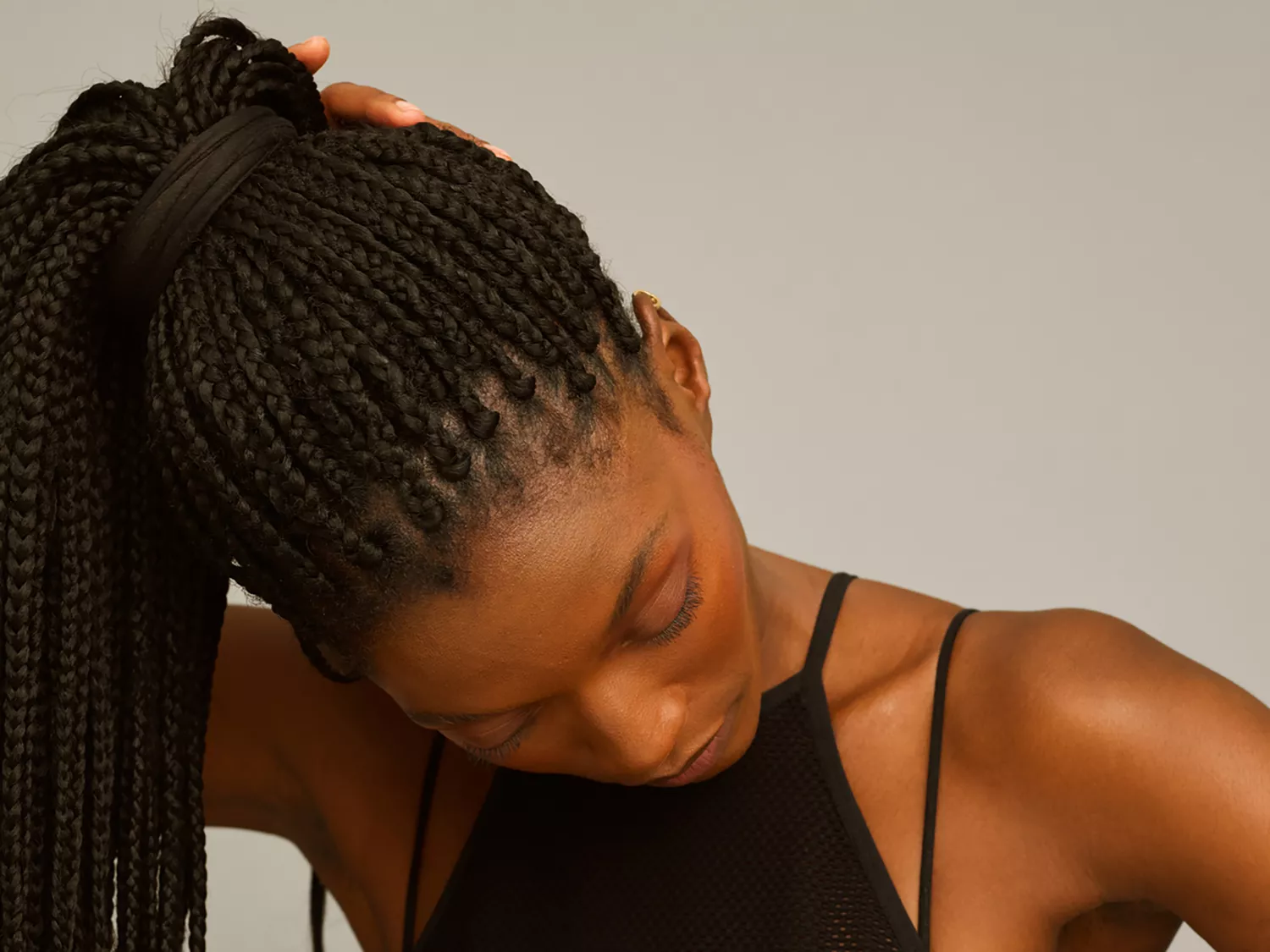
ohlamour studio / Stocksy
Braids are hands down the most popular protective styles around. But just because they're a protective style doesn't mean they don't come with their issues. The biggest drawback? Braids that are way too tight. No one wants to deal with the scalp sores, pain, or worse that too-tight braids can yield.
So, we consulted expert hairstylists and board-certified dermatologists to find out how to relieve the pain and tension caused by too-tight braids. Keep scrolling to learn more about how to treat tight braids on the scalp.
Meet the Experts
Alicia Bailey is a hair texture expert and the global education manager at Design Essentials.
Kayah Pounce is a texture expert at Maggie Rose Salon.
Dr. Brendan Camp, MD, is a double board-certified dermatologist at MDCS Dermatology in New York City.
Dr. Marisa Garshick, MD, is a board-certified dermatologist at MDCS Dermatology and an assistant clinical professor of dermatology at Cornell—New York Presbyterian Medical Center.
Dr. Alexandra Bowles, D.O., is a board-certified dermatologist at MONA Dermatology.
01 of 14
Communicate With Your Stylist
Do yourself a favor and see how your head feels when you're still in the stylist's chair. Does it hurt while they're braiding? That's the time to ask them to ease up. It's much easier for them to take a step back and possibly redo any braids during your appointment than to call and ask her to redo them later. Plus, let's face it: Not all braiders take kindly to second-day phone calls and may refuse a do-over.
The next time you get your hair braided, keep an open line of communication with your stylist: If you're sitting in the salon chair and your braids feel too tight, let the braider know. On the other hand, you can always tell them beforehand that your scalp is tender and you do not like extra-tight braids. If a stylist doesn't alter their technique, they're not the stylist for you.
02 of 14
Run Your Braids Under Water
A warm shower isn't just good for the body—it can also help loosen tight braids. "If the braids are too tight, one can try to run their hair under cool or warm water in the shower," says Bailey. To loosen the braids, you may need to rub your scalp (gently).
This is not the time to worry about how much money you just spent and how much time it took to style these braids. Instead, concern yourself with loosening up the tight style and saving your hairline: Bailey says tight braids can also lead to thinning of the hair or hairline and hair breakage.
03 of 14
Wear Your Hair Down
Believe it or not, wearing your hair up in a ponytail or bun post-braiding can exacerbate the pain. "Try not to manipulate the braids too much by pulling them up in ponytails or trying to style them in any way," says Bailey. Camp adds that prolonged tension on the hair from tight hairstyles, braids, buns, or ponytails can weaken the root of the follicle. Over time, the hair follicle may become permanently damaged, leading to hair loss. Wear your hair down to loosen any tension, thus weighing the braids down. This is a simple way to not tug at the roots or scalp.
04 of 14
Use Leave-in Conditioner
"If a hairstyle pulls on the scalp and is causing pain, then it is likely too tight and causing mechanical damage to the hair follicle," explains Garshick. If your scalp feels drier and tense than usual, apply a leave-in conditioner to soothe the area and loosen up the braids.
Try using a spray leave-in conditioner that you can easily spritz between your braids and evenly across your scalp. However, keep in mind that too much leave-in conditioner can cause unwanted buildup and residue.
05 of 14
Give Yourself a Scalp Massage
Sometimes you need to take matters into your own hands—literally. A scalp massage isn't just stimulating; it soothes tension, too. A quick scalp massage can increase blood circulation, aiding in alleviating pain all around.1
Pounce recommends adding essential oils to your carrier oil of choice. "To help soothe the tension on your scalp, gently massage tea tree oil or lavender oil into the area where you're experiencing discomfort," she says. "Both of these oils have soothing properties that ease inflammation." Apply the hair oil on your fingertips before getting in between your braids and massaging for a few minutes.
Byrdie Tip
As essential oils can lead to chemical burns and irritation for some, it's always best to test the oil on a discrete area before applying it all over.
06 of 14
Don't Skip Nighttime Scalp Protection
"We often focus on protecting the braids themselves at night, but your scalp needs love, too," says Bowles. Instead of cotton pillowcases, which can pull moisture from your scalp and even cause friction that irritates already-stressed areas, she recommends wearing a silk or satin scarf or bonnet and, if possible, using a silk pillowcase for extra protection. "If your scalp feels dry before bed, a quick mist of a lightweight, hydrating scalp tonic can work wonders overnight," Bowles adds.
07 of 14
Try a Hair Steamer
Sometimes your braids need a little steam. Not to be confused with a hooded hair dryer, a hair steamer is meant to open up the pores on your scalp. This makes it easier for braids to loosen up while your scalp retains more moisture.
08 of 14
Spot Treat Your Scalp
While some mild flaking can be expected, persistent itching or visible flakes under your braids might be a sign of scalp irritation or even contact dermatitis. "If you notice these signs, don’t ignore them," says Bowles.
Instead, she recommends using a gentle, alcohol-free shampoo or even a medicated shampoo in a diluted form to spot-treat the area. "Listening to your scalp early on helps prevent things from progressing into full-blown inflammation or infection," she adds. "Speak to your dermatologist to see if this is the right treatment for you."
09 of 14
Use a Comb
If your braids are extremely uncomfortable and tight, one of the best tools you can use is probably in your bathroom. Yup, you can use your thin, rattail comb to gently create space in between your scalp and the braids. Just make sure not to loosen them too much to avoid frizz.
10 of 14
Keep an Eye on the Nape of the Neck
The nape area is often overlooked, but it’s one of the most sensitive spots on your scalp. "Braids that are too heavy or too tight in this area can lead to breakage or even small bald patches over time," Bowles says. If you're getting longer braids or twists, she recommends asking your stylist to use less tension on the nape and avoid loading that area with extra weight. Bowles adds that protecting this zone can make a significant difference in the overall health of your hair.
11 of 14
Take Out Your Braids
We know this is not the tip you want to read after sitting in your braider's chair for hours, but you should remove braids that cause little bumps on your scalp. Tight braids can lead to hair loss down the road, especially if you make a habit of wearing tight braid styles. "If the braids are unbearably tight, I highly recommend taking them out to prevent hair loss or breakage," says Pounce.
If you do need to remove your braids, be sure to give your hair and scalp some much-needed TLC. Try a hot oil treatment or a soothing oil specifically formulated for the scalp with calming and anti-inflammatory ingredients. You can use either of these options as a pre-poo before following up with a calming deep conditioner.
12 of 14
Be Gentle During Takedown
How you remove your braids matters just as much as how you install them. "Too many people rush the takedown process, which can lead to unnecessary breakage and even scalp irritation," says Bowles. She always advises patients to detangle gently as they go, using a detangling spray or conditioner to soften buildup, and never force out a tangle. "Taking your time during removal gives your hair and scalp a much-needed reset and prevents long-term damage," Bowles adds.
13 of 14
Take a Break from Braids
Wearing tight braids or other hairstyles that are tightly pulled back for extended periods can damage the hair follicles, leading to a condition known as traction alopecia. "I tell patients to try to stick to loose braid styles or at least take a break in between braid hairstyles to give your scalp time to recover," says Boweles. If you notice your hairline thinning or receding, this could be due to the braids pulling on the scalp and potentially causing permanent hair loss. Therefore, Bowles advises being cautious.
14 of 14
Do Not Return to Tight Braiders
Some braiders are notoriously hard on hair. Once should be enough to tell you that this is someone who doesn't care about the health of your scalp. Hopefully, you live in an area with options, but if you don't, you may need to rethink braid extensions as a regular hairstyle.
FAQ
What happens when braids are worn too tight?
"Tight braids can potentially cause permanent damage to the scalp and the hair," says Bailey. She explains that when braids are too tight, they can potentially cause soreness or follicular pustules (inflamed, sore, raised bumps on the scalp) in addition to traction alopecia.2
"Traction alopecia is hair loss caused by continuous tension on the hair follicle," Camp explains. "Tight hairstyles, such as buns or braids, can weaken the root of the hair follicle. Traction alopecia is biphasic, which means that, initially, the hair loss is temporary and can be repaired if the tension on the follicle is removed. If the tension continues, the hair loss can be... permanent." Garshick adds that while traction alopecia can initially be considered non-scarring, it can evolve into scarring hair loss if not addressed.
Article Sources
Byrdie takes every opportunity to use high-quality sources, including peer-reviewed studies, to support the facts within our articles. Read our editorial guidelines to learn more about how we keep our content accurate, reliable and trustworthy.
Kim I, Kim T, Ko Y. The effect of a scalp massage on stress hormone, blood pressure, and heart rate of healthy female. J Phys Ther Sci. 2016;28(10):2703-2707. doi:10.1589/jpts.28.2703
Urbina F, Sudy E, Barrios M. Foliculitis por tracción: seis casos producidos por diferentes tipos de peinado tirante [Traction folliculitis: 6 cases caused by different types of hairstyle that pull on the hair]. Actas Dermosifiliogr. 2009;100(6):503-506.
Advertisement
Advertisement


Advertisement
Advertisement


